
This is the six in a series of chapter-by-chapter discussions of Saint-Martin’s “Natural Table”. The previous chapter can be found here.
After the discussion of the events of the Fall of Man, Saint-Martin now dives into the pitiable state in which we now live, but he does so in a way that offers a glimmer of hope.
Regret
He first notes that remorse for our cosmic-scale crime is almost entirely absent from humanity. In fact, even regret is rare, since knowledge of our crime is so uncertain. A natural consequence of our action was a loss of the Light of Truth, and so even the truth of our actions has become confused for us.
Being unaware of the nature of our crime leads many to deny it, and so to continue to act against the Divine instead of working to recover our original state. Saint-Martin states this as proof that we can never comprehend the Truth while in this material world. If we could, then we would no longer be being punished, and so we would escape this world. Our existence in this world is evidence enough that absolute Truth is beyond us.
Classes
Here Saint-Martin discusses the different ways that various “Intelligent Beings” interact with the Divine Light. Note the words, “Intelligent Beings”. Not “Man” or “Humanity”. Clearly some of these Beings are demonic or angelic.
The first class are those Beings who are akin to minerals buried in the earth. These are totally separated from the Light. This may include some elements of humanity, but I believe that he was thinking about demonic beings. Those who fell in the First Fall.
Then comes those who are like plants. They experience light, and take nourishment from it, but there is no understanding or enjoyment. The interactions are purely passive. It is to this class that I believe Saint-Martin assigns the vast majority of humanity, although he later mentions that most are somewhere between this and the lowest group.
Next are animals. These see and enjoy light, yet have no understanding of it and do not contemplate it. He compares these with beings who let the Light work on them internally, but yet do not understand how it is spread. These are those who are already on the path to reintegration with the Divine.
Finally are those lucky few who he compares to humanity in its relation to physical light. These beings are akin to the Divine in that they can receive, see, enjoy, and understand the Light. The way this section is written makes me believe that Saint-Martin is speaking about a superior class of people who have finally achieved reintegration with God. But, in the back of my mind, I wonder if this is one of the first hints of Christ and His mission.

No hope for an escape
A this point Saint-Martin begins a discussion about the fallacy of suicide to escape the pain of living. This is an uncomfortable topic, and one that I want to be sensitive about, but I also want to extract the most important parts of his thinking.
First he makes a comparison of us in our present state with God.
God is certainly capable of releasing us from our material prison, but He has no intention of going against Justice. On the other hand, we would desperately love to, but are absolutely incapable of it.
Remember that the body is only real to other bodies. Since the absolutely real part of us is not our body, then destruction of the body does not change anything real. This means that the pain, misery, rot, and corruption that is our lot in the material world will not be erased in death. For Saint-Martin, these lost souls may be reincarnated as plants and “lower” animals, and may even explain ghosts(!)
Birth, argues Saint-Martin, is a gift.
He claims this since our existence in this world of relatives and appearances gives us the chance to work to repair the damage we did in the First Crime. It is true that we will be rocked by trouble during our earthly lives, but he takes a rather Stoic viewpoint here. It is our own weaknesses that give these troubles the ability to destroy us, and so it is us who given them their power.
For there is nothing
Hamlet, Act 2, Scene 2
either good or bad, but thinking makes it so.
This is, naturally, easier said than done. In the very next sentence he points out that to accomplish this — to actually rise about the pain and suffering of the material world — would require us to develop a “sublimity which is quite foreign” to us.
Time
The properties of the material world include the action of time, and it is this that is truly our prison. Time is a poison that rots at us. Like water, it dissolves. Slowly or quickly, it acts to degrade and remove value.

He draws an analogy of the vertex formed by two lines meeting at an angle. The closer a Being finds itself to the vertex, the easier it is for it to travel from one line to the other. For those further away, they will be forced to subdivide their journeys according to temporal divisions.
The Being located at the vertex – the Highest Principle – is simultaneously at the start and end of the journey. His navigation is that of His own Unity, and so “time is absolutely meaningless to Him.”
Lying furthest from the apex, our journey is the longest and the hardest.
Embodied life
In a hint of his own spiritual practice, Saint-Martin points out that the Light can only reach us when we still our senses. We do not experience the Divine rays via our physical senses. These only get in the way. Rather, we must remain quiet and allow them to become passive before we are capable of this.
Although we find ourselves among physical objects, we must remember that these are temporary. That which we need to remember has never left our (spiritual) sight. Our aim should not be to acquire something from physicality, but rather to lose nothing of what we had.
A well-lived life should result in an old-age that combines the fruits of experience with the innocence of our childhood. We would find the Light and Truth within ourselves, and we would see the image of God everywhere. Such a life would bring us back to our first state.
Returning to the subject of reincarnation, Saint-Martin states his belief that we must perform this multiple times depending on how far he has fallen. This is certainly a statement that would have put him strongly at odds with his native land’s Catholic faith. But more importantly, he states that the degree of our fall is equal to the number of stars in the sky.
We each, it would appear, have many lives to live to regain our esteemed position.
Reflections of the Truth
We are also to remember that the truths that we see here below are reflections of the Divine Truth, but that that Truth is of a nature that is impossible to comprehend from a relative existence. While we can get ideas of the Divine, we will never be able to see it from our current vantage point.
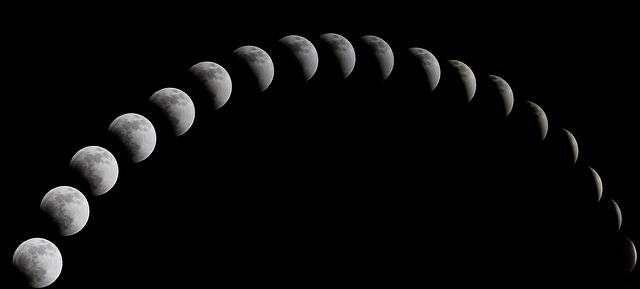
He compares this to the Moon. We see it with multiple faces as it travels around us over the course of a month. It represents a static Truth that we can only see as undergoing constant change. Once a month it will even disappear from view, even though we know that it rises over the horizon.
The journey of a lifetime
Saint-Martin rounds off this chapter with an analogy of an adventurer setting out to conquer the highest peak in a range of mountains. The goal is hidden amongst the clouds, and so invisible to the climber starting out on the journey. Those who have gone before have left traces for her to follow, but many of them have advanced so far that they are no longer visible to the neophyte. Nevertheless she retains her faith that they are well on their way to the goal.
The journey cannot be straight. After reaching the tops of the earlier mountains, we will be forced to walk at the same elevation, or even to descend, before reaching the slopes of the next one. We will be delayed and held-back by the daily impediments of life. But this will allow us to rest and conserve our strength, as well as to breathe the purer air that we will find at these new altitudes.
Some of us will give up, and will identify ourselves with the false pleasures material world. Others will keep making progress, but their identification with the material world will slow them to the extent that they cannot complete their journey.
But those who have journeyed the longest and who have avoided mixing their true essence with the material world will reach their goal. There they will “shine, like the stars, in brilliant splendor”.
…after death, criminals remain under their own justice, whereas wise men are under the justice of God, and the reconciled are under His mercy.
Louis-Claude de Saint-Martin
The journey is hard.
But there is hope.
Before the flambeaux.
Leave a Reply