This is the ninth in a series of essays discussing, chapter-by-chapter, Louis-Claude de Saint-Martin’s “Natural Table.” The previous chapter can be found here.
After several chapters of hammering home just how much trouble we are in, and how far we are from the Divine (although always with a sense of hope), in this chapter he begins to explain how he thinks we can work for our own salvation. It contains the usual tension where God not-quite-abandons us, while always placing His Love and Wisdom within reach.
But in the end, it is up to us to act.
Necessity of religion
The entire gist of this chapter is intended to demonstrate the need for religion, including people who are to act as priests, for rites that are performed physically, and of the particular importance of prayer.

Throughout the text, Saint-Martin refers to Thought, Will, and Action as the Three Divine Powers. As with everything in the Divine, these powers are not separate in any way, except for how we perceive them from the material world. In the Divine Realm, these powers are one, and are indistinguishable.
From our perspective, however, they appear separated. We can discern them within ourselves as something that happens sequentially:
- First we conceive the thought of doing something.
- We then will it to be so.
- And only then do we act on it.
Thought –> Will –> Action
A Divine Ladder
Seen in this way, we perceive them as sequential, with “thought” being, in some sense highest. Then “will”. And then “action” as the lowest on this illusory ladder.
Since Divine Action would then be closest to us, it is in terms of this that we must work in order to bring ourselves closer to God. That is, we must take action that is aligned with the Divine in order to bring us closer to our rightful place.

This can be combined with an extract from another of Saint-Martin’s works, “On Numbers”, in the following way. It is our job to act in the world according to the Will of God. That is, our actions should be governed and directed by the step above us in the ladder of Divine powers. Only then can our will be steered by Divine Thought, leading finally to a unification of our thought with the Oneness of God.
(Note however that the above interpretation leans more heavily on the later text, “On Numbers”. Saint-Martin’s views evolved over time, and so this may not be the intended reading of the chapter we are discussing here.)
Talents
As is his style, Saint-Martin turns to something that at first sight appears to be an entirely different subject. Making the observation that, in terms of physical skill, there appears to be a wide spread of natural talents observable in different people. Since this is the case physically, it may also be assumed to be the case in terms of what he refers to as “intellect”, but what is probably better interpreted as spiritual wisdom.
Yes, we are all born with a Divine Spark within us, but the strength of the connection and the degree of the wisdom will vary between individuals.

Saint-Martin uses this to split humanity into two: the “General Elect” and the “Particular Elect”, where the “General” are those naturally talented people who work for the reintegration of all, which the “Particular” are those must limit themselves to working for their own salvation.
These terms are interesting for a couple of reasons. First is that it echoes the “Élus” part of the “Élus Coëns” order of which he was still a member at this time. But maybe more so is that both “order” of humanity are blessed with the name of “Elect”. That is, no matter if you find yourself in the “higher” or “lower” of his classes, you are still Divinely Elected and capable of unification with the Divine. God’s Love is denied to no-one in Saint-Martin’s system (looking at you, John Calvin…)
The main argument here is, of course, that there exists a class of people who are perfectly suited to a divinely ordained priesthood.
What next?
At this stage in his argument, Saint-Martin has set up the need for us to do something to work for our redemption, and a priestly caste who are equipped to help us do this. This is the basis of religion as he sees it.
But what is it that we should do?

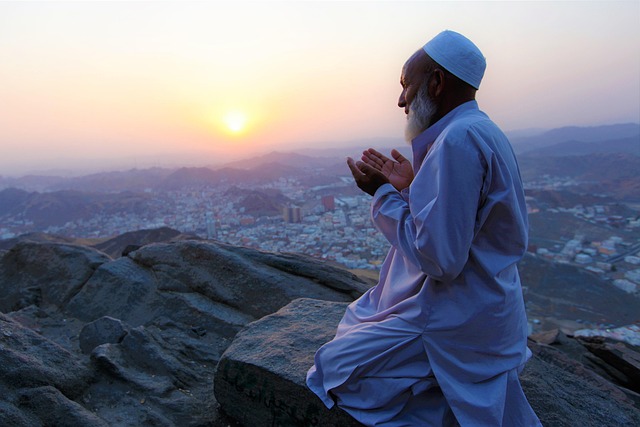
Well, for one we should pray. Not because the Divine has any need of our prayers — since He is already aware of the totality of the Real, there is nothing that we can communicate to Him that He doesn’t already know. The reason that we should pray is that it is a way for us to heal. Just like our physical bodies are constantly under attack from disease and age, our spiritual bodies are similarly under attack from the forces of confusion and error. For the health of our spirits, prayer is as fundamental to us as breathing is for our bodies.
…Yet in truth prayer is to their intellectual Being what respiration is to their body.
“Natural Table”, Louis-Claude de Saint-Martin
In terms of the religious acts that we are to conduct, Saint-Martin leaves a lot of leeway, and warns to take care against judgement of others. Much like with physical exercise, each of us will have a different need, and so we should take different routes. It may also be the case that we judge something to be lesser, while remaining completely unaware of the depths that it offers to the person performing it. What appears as lesser may actually be seen to be more profound if we had developed the capability to dig deeper.
Reintegration of All
Details of the religious acts do not arise in this chapter, and will be addressed later in the book, however it can be seen that Saint-Martin has set up a rather grand scene here. It is this chapter that justifies the full title of the book — “Natural Table of the Relationships which exist between God, Man and the Universe”.
Of the three classes of Beings listed in the title, Man is intended to minister to the (material) Universe, and bring it closer to God. But this Divine Priest must learn her/his trade from observations and lessons given by the Universe itself. Looking “downwards” to the Universe for these lessons, and “upwards” to God to ensure that we are not being fooled by agents of confusion, we can begin the task of crafting the Universal religion.
In a wistful and beautiful argument at the very end of the chapter he points out that there is indeed a prayer that we can offer to the Divine that cannot come from anywhere else than us. Since we suffer, and since suffering has no place in the divine realms, a prayer of suffering is something that we can do that completes a circle from the Divine to the World and back to the Divine.
But there is a type of prayer intended to allow us to procure those precious gifts: those are prayers of suffering, and those cannot come to us from the superior and supreme center, where there is no suffering at all.
“Natural Table”, Louis-Claude de Saint-Martin
Before the flambeaux.
Leave a Reply