
This is the tenth in a series of essays discussing, chapter-by-chapter, the book “Natural Table” by Louis-Claude de Saint-Martin. The previous article can be found here. Each of these will stand well on their own, but it’s unavoidable that a better picture will be formed by reading them in order.
Mythological lessons
In this chapter Saint-Martin considers what myths and legends might tell us about our spiritual reality. Rather than taking the details of myths, he looks at them from a helicopter perspective, trying to understand what lies behind the existence of what he sees as broadly similar fables existing across cultures, time, and geography.
All of the chapters so far have dealt with Saint-Martin’s theological or mythical positions. He starts with some fact of nature or life that we can observe, and from that extracts a higher truth. This chapter is different however. Here he relies quite heavily on contemporary anthropological theories, and uses these to try to rule out certain explanations lying behind the mythlogical histories of various nations.

He starts by acknowledging the huge variety of myths offered to us by cultures around the world, arguing that each of these contains a seed of the truth. These divinely inspired stories slowly corrupted over the years, perhaps due to incorrect interpretations, or perhaps through unnecessary additions by satanically inspired people.
A common source of wisdom
On the other hand, he argues that their similarities are a reason to believe that they really do, in fact, contain a kernel of truth. How, goes the argument, could it be that cultures separated by oceans and/or millenia could have developed mythological fables that share so much in common? This could only be the case if these stories were given to us by the Divine.
His argument here is based on an interventionist view of God in that the Divine intervenes at various points in history to embed a myth within a culture, or to correct one that has decayed from its original meaning. These are not prophetic interventions in the style of the Old Testament, but rather indicate times at which a Divine messenger interfered with the world in the way that would provide an instructive metaphor for future generations.
Mundane beginnings
A significant portion of the chapter is devoted to debunking two theories that he sees as being particularly prevalent. Firstly, that myths were developed to describe and help with agriculture. And secondly, that the myths were developed by what Saint-Martin refers to as “Hermetic Philsophers” to describe alchemical processes.
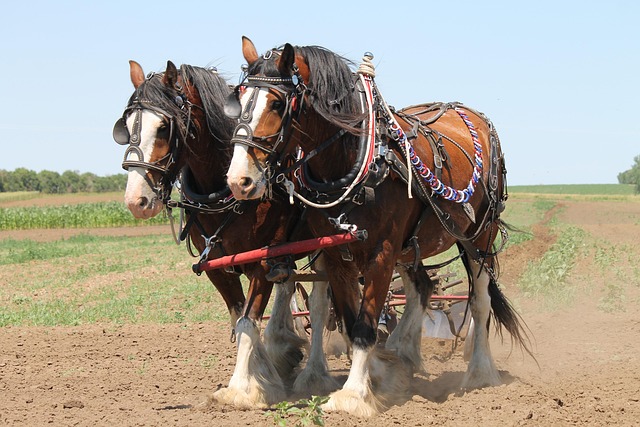
For the first of these, the theory is that myths were developed in conjunction with observations of the heavens in order to assist with the timing of agricultural events. In this theory, mythology and astrology went hand-in-hand in the development of human culture for the purpose of timing harvest seasons, etc., and it is something that he disagrees with strongly.
The myths we have inherited from our ancestors and those passed down across all cultures are simply too sublime, too beautiful and too detailed to be simple mnemonic crutches for the timing of seasons. They simply contain too much interpretive potential for them to be metaphors for farming techniques.
Alchemy
The second theory that he is particularly concerned about relates to those he calls, “Hermetic Philosophers”: material Alchemists. I have to admit that I find this argument a little disappointing. Much of Saint-Martin’s texts make significant use of alchemical symbolism in a way that works very well. Entire chapters are spent in very interesting discussions of the motion of the classical elements, and how these are reflected in alchemical bases (Mercury, Salt, etc.), yet here he spends a lot of ink critiquing alchemy.

I can understand if he was targeting material alchemists in particular. That is, those trying to enrich themselves by producing gold from base metals, but the final paragraph of the chapter seems to imply that even those interested in spiritual alchemy are barking up the wrong tree:
If in the different Orders of Hermetic Philosophers, there are those who seem to take a higher path, and who claim to accomplish the Work without using any material substance, we cannot deny that their walk is more distinguished. But we cannot find their object worthy of them, nor their goal any more legitimate.
Saint-Martin, “Natural Table”, emphasis mine.
Conclusions?
To be frank, after the profound realisations of the previous chapter, I find this one to be a little disappointing. The main purpose of this tenth chapter is similar to that of his first book, “Errors and Truth”. That is, to point out what he sees as contemporary mistakes and misinterpretations of our current state. Although this is an important step that he needs to take to provide weight to his arguments, I can’t help but think that it doesn’t quite fit in this work.
On the other hand, my disappointment may be a little unfair, since the time in which he was writing may have required him to make these arguments. In this sense then, this chapter was a necessary addition to the work, but is one that has lost some of its force due to cultural and academic developments since then.

For those of us more interested in spiritual working and theorising, and less in historical developments, this chapter still contains some interesting nuggets. It maintains Saint-Martin’s argument that the Divine continues to offer us His Love, continually pouring out His assistance to us. But not just in an abstract sense, but by intervening in our cultural history to provide us with signposts to the Truth.
As always, the message is that Divine Love has never been withdrawn. But it is up to us to tune our awareness so as to be receptive of it.
Before the Flambeaux.
Leave a Reply