
This is the eleventh essay in a series where I explore, chapter by chapter, the book “Natural Table” by Louis-Claude de Saint-Martin. The previous chapter can be found here.
Sources of myths
In the previous chapter Saint-Martin spent a lot of time exploring what he saw as common-but-wrong explanations for mythology, and so here he moves on to giving his arguments for more cogent explanations. That he will go on to argue that the enormous library of myths developed by humanity across time and culture point to the spirituality put forward by Saint-Martin is not so surprising. What is of interest however, is his arguments for why Divine messages should appear in this form in particular.
He reminds us of the theory put forward in the first chapter, that none of our thoughts are generated by us. They come either from the Divine or from material and/or evil influences. Thus, in communicating the Truth to us, the One will project divine thoughts into our being.

We will, in turn, then try to communicate those thoughts to others. But in this material realm, the only way for us to do so is via words, either written or spoken, and so (according to Saint-Martin) we must start with an image. Only once we can visualise an idea can we communicate it. And so from the indescribable and unspeakable Truth, we construct images and stories that allow us to communicate it to others.
Styles of myths
But myths are not just images. They are stories of humans, demi-gods, and gods, interacting with each other in very human ways. Why?
Man is the most noble thought of God
“Natural Table”, Louis-Claude de Saint-Martin
Given that humanity is the pinnacle of the work of God, it makes sense that the imagery best fitted to communicate sublime Truths is that of humans and human-like beings. Thus, the most fitting imagery with which to spread the Truth of our spiritual condition is that which we observe in traditional myths and legends.
Corruption
Just as the light reflected from a surface depends on the quality, colour, etc., of that surface, so the thoughts communicated by someone will reflect their own qualities. A virtuous person, perhaps one of the General Elect described in the ninth chapter, will then reflect this Truth in a pure and unsullied way just as light reflecting from a polished diamond. But a “Man of the Stream” or someone in the thrall of demonic influences, will muddy the reflection, and so communicate a damaged version of the original thought.

But while these effects are slowly corrupting the stories we share with one another, there is another effect at work. God’s Love is continually raining down on us, with the only necessity for us to receive it being our willingness to do so. This is equally true here. God has acted many times to inspire new stories with which to communicate the Truth, and this has been done across cultures and languages in order to allow all to have access.
From this perspective, we are richer now than we have ever been.
False worship
But what of the dangers of idolatry? Isn’t it true that many interpretations of myths could lead us to worship in the wrong way? Cults of the Sun, nature-worship, raising particular people to the level of gods, etc.?
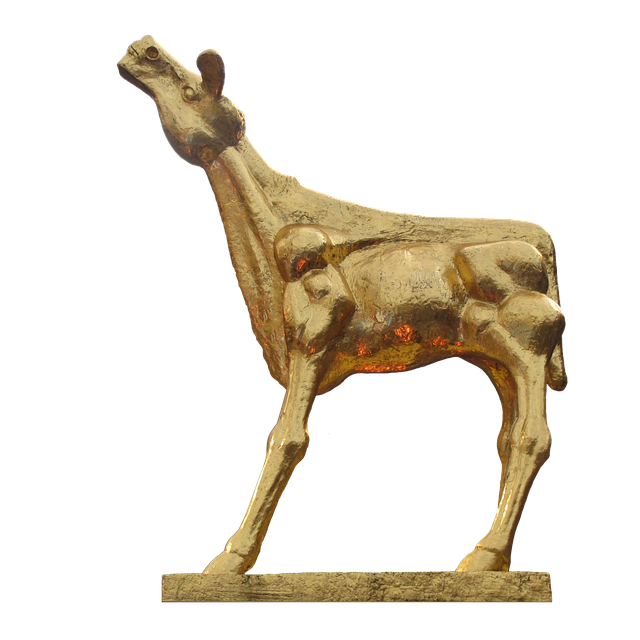
Well, Saint-Martin has a very interesting take on this. The problem is not that we raise “terrestrial” things up the level of the Divine, since this actually presupposes the existence of the Divinity. Such idolatry is yet more proof of the Highest Principle, since how could we suppose that material things were actually Divine unless the Divine had made itself known to us?
No, the problem is actually the opposite. The real mistake is when we let our focus rest on lesser things, and thereby reduce ourselves to the level of the material. When, through the worship of particular people, aspects of Nature, etc., instead of allowing these things to raise our thoughts to higher levels, we define Divinity by their material properties — it is here where the danger is. In doing so we reduce our thoughts — those that come from the Divine — to the level of the material.

Idols as a source of Truth
This view seems curious to me. It’s not clear if Saint-Martin is somehow preaching that certain forms of idolatry are acceptable, as long as we use the practice to raise our thoughts to Heaven. That is, would Saint-Martin view Sun worship as OK, as long as it is symbolic in nature, and does not act to restrict or diminish our thoughts? From the previous arguments it would seem that he would be OK with it, but then he moves on to an argument based on that very example where he concludes that such worship is not appropriate.
His complaint with Sun-cults is that the Sun performs its daily duties irrespective of our intercessions. It rises and sets in an almost mechanical way that needs no actions or prayers to complete its work. It therefore has nothing in common with humanity — declared to be the highest thought of God — in its actions and duties.
I can see his point here, and I can see that it would be fairly unusual for an 18th Century Christian mystic to be arguing for Sun worship, but I think there is a subtlety to his argument that allows a certain flexibility. His main concern is that idolatry becomes problematic when it results in us lowering our gaze. That is, when we reduce the Divine to something that can be found in the material world. If we use it to find reflections of the Divine in materiality, and so raise ourselves and our thoughts back to their original heights.
Lift your eyes
In the end, Saint-Martin’s claim that all mythology stems from a common, Divine, source is not so surprising. What is much more interesting is his observation that such myths rely heavily on human-imagery. Since we are the highest thoughts of God, then this type of imagery can only be evidence that myths are, at their source, divinely inspired.

He is aware that corruption can and does occur in the transmission and interpretation of these myths, but even this is evidence for him of Divine power.
That we recognise the divine in anything, even if badly misplaced, can only be because of the actual existence of divinity. Even idolatry, although clearly incorrect and full of risks, can be something that leads us to God. As long as we use these images to raise our thoughts back to their original heights, and do not fall for the trap of assigning material properties to divinity.
So, in all things, stay conscious of the Truth.
You are the Highest Thought of the Divine.
It is you who is to reflect the Glory of the One in this world of materiality.
Before the flambeaux.
Leave a Reply